Missing a competition deadline is frustrating, especially after weeks of research and drafting. If you are searching for what to do after a HIEEC late submission, this guide offers a practical path forward. Rather than chasing unlikely extensions, the focus here is on preserving the work you have done and redirecting it toward the next competition cycle or a better-fitting opportunity.
Accept the Deadline as Final
The Harvard International Economics Essay Competition (HIEEC) is organized by the Harvard Undergraduate Economics Association (HUEA), with involvement from the Harvard College Economics Review. This site is an independent guide and is not affiliated with, endorsed by, or sponsored by Harvard University, HUEA, or HCER.
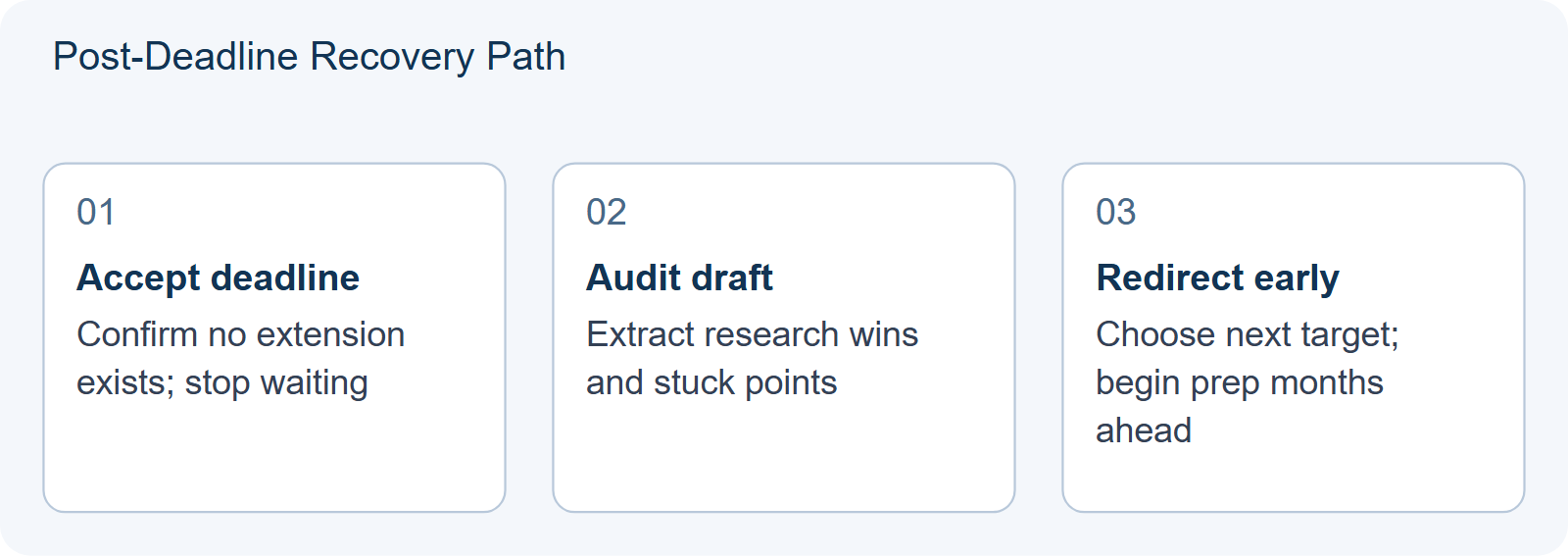
From the organizer’s perspective, submission deadlines are typically fixed. HIEEC does not advertise a late acceptance policy, and students should not assume that extensions are available. The most reliable source for any exception would be direct communication through HUEA’s official channels, though past cycles suggest deadlines are enforced consistently.
Spending energy on appeals or waiting for unlikely exceptions usually delays productive next steps. The better use of your time is to treat the missed deadline as a fixed boundary and move into recovery mode.
Review Your Unfinished Draft for Transferable Learning
Even an incomplete essay contains value. Before discarding or archiving it, conduct a structured review to extract lessons that will strengthen your next attempt.
What worked in your research phase?
Identify which sources, data sets, or analytical frameworks felt most productive. Did you find a particular academic database especially useful? Did certain economic models clarify your thinking? Catalog these for reuse.
Where did you get stuck?
Be honest about obstacles. Common sticking points include:
- Overly broad thesis statements that resisted focused argumentation
- Insufficient engagement with counterarguments
- Difficulty connecting empirical evidence to theoretical claims
- Misalignment between the chosen prompt and your actual expertise
These friction points are diagnostic. They reveal skills to develop before the next cycle.
How strong was your prompt fit?
Sometimes a missed deadline masks a deeper issue: the chosen prompt was never the right match. If your interest waned during drafting, or if the question felt like a stretch, that is useful information for future selection.
For guidance on how to evaluate prompt fit more systematically, see our article on how to choose a HIEEC theme.
Decide Whether to Target HIEEC Again or Redirect
Not every student needs to return to the same competition. A missed deadline is a natural moment to reassess fit.
Reasons to return to HIEEC
- You were genuinely engaged with the prompt and your research direction
- The timeline conflict was external (exam schedule, technical issue) rather than motivational
- You have identified specific, addressable weaknesses in your approach
- You value the feedback mechanism and publication opportunity HIEEC offers
Reasons to consider alternatives
- The economics essay format consistently creates bottlenecks for your writing process
- Your academic interests have shifted toward other disciplines
- You need a competition with a different timeline or structure
- You want more iterative feedback before final submission
If you do return to HIEEC, the preparation window between cycles is substantial. Use it deliberately.
Prepare for the Next Cycle with Early Planning
The most effective recovery from a missed deadline is early preparation for the next opportunity. HIEEC typically releases prompts with several months of lead time before submission deadlines. Students who begin work early produce more polished, well-researched essays.
Build a reading habit now
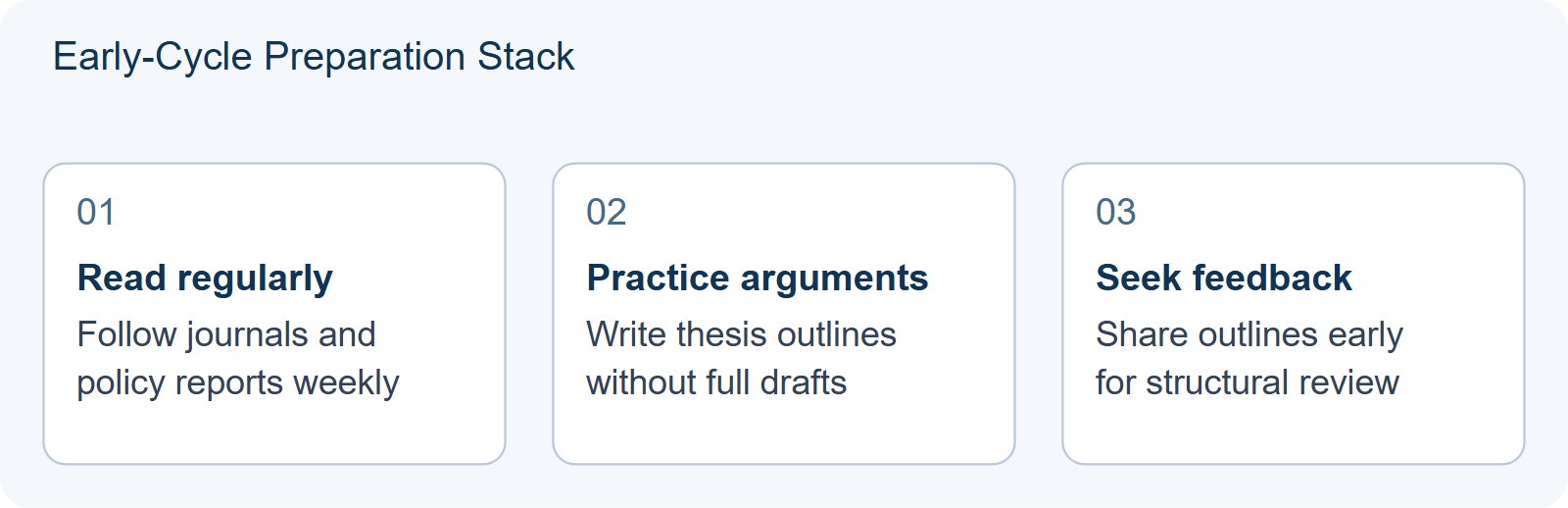
Strong HIEEC essays demonstrate familiarity with current economic debates. Rather than cramming research after prompts release, maintain ongoing engagement with:
- Academic journals in development economics, behavioral economics, or trade policy
- Policy reports from institutions like the World Bank, IMF, or national development banks
- Opinion and analysis sections of financial publications that ground theory in current events
This background knowledge accumulates invisibly and surfaces as confident, specific argumentation when you draft.
Practice structured argumentation
Consider setting yourself practice prompts unrelated to any competition deadline. The goal is not to produce submission-ready work but to build the muscle of:
- Formulating a clear, contestable thesis
- Supporting claims with empirical evidence
- Addressing counterarguments without weakening your position
- Maintaining disciplinary rigor while writing accessibly
For a detailed breakdown of what distinguishes strong submissions, our article on what HIEEC judges look for provides concrete evaluation criteria.
Seek feedback before the pressure builds
One reason deadlines are missed is last-minute discovery of structural problems. Reverse this pattern by sharing outlines or partial drafts with mentors, teachers, or peers well in advance of any deadline. Early feedback on argument structure is more valuable than late feedback on prose polish.
How to Evaluate Whether Competition Coaching Fits Your Situation
Some students benefit from structured support to avoid repeating the patterns that led to a missed deadline. Competition coaching can help with prompt selection, research organization, and timeline management, but it is not necessary for every student.
Consider coaching if you recognize one or more of these patterns:
- You consistently underestimate the time required for research and revision
- You struggle to narrow broad interests into contest-appropriate thesis statements
- You have received generic feedback in the past and need more specific guidance on economic argumentation
- You want accountability for intermediate milestones before the final deadline
Conversely, self-directed preparation may suffice if you have strong institutional support, reliable peer feedback, and demonstrated ability to meet self-imposed deadlines.
Turning a Missed Deadline Into a Stronger Next Attempt
A missed HIEEC deadline does not erase your preparation. The research skills, topic familiarity, and writing practice you accumulated remain assets. The key is to channel them more effectively into the next cycle rather than letting momentum dissipate.
Start by preserving what you have: document your research sources, save your partial draft with annotations about what worked and what did not, and calendar the typical prompt release window for the upcoming cycle. Then shift from recovery to proactive preparation.
For students preparing their first HIEEC submission or returning after a gap, our complete guide to the HIEEC competition format covers eligibility, structure, and timeline fundamentals.
For a deeper look at how winning essays are structured and what separates finalists from the rest, see our analysis of HIEEC winning essays and their common characteristics.
Finally, if you are serious about competing in the next HIEEC cycle and want support with early prompt selection and structured planning, consider reaching out through the contact options below. Starting early is the most reliable way to avoid the pressure that leads to missed deadlines.
Frequently Asked Questions
Can I submit my HIEEC essay late if I email the organizers?
HIEEC deadlines are typically enforced without exception. While you can contact HUEA directly through their official channels, you should not rely on late acceptance. The more reliable path is to prepare for the next competition cycle.
Should I finish my draft even though I missed the deadline?
Completing the draft as a practice exercise can be valuable if the prompt still interests you, but prioritize learning extraction over perfection. Note what research methods worked, where your argument weakened, and how your prompt selection process could improve.
How early should I start preparing for the next HIEEC cycle?
Ideally, begin building background knowledge and reading habits immediately after a missed deadline. When prompts release, aim to have a working thesis within two weeks and a complete first draft with six weeks remaining for revision and feedback.